CHREAA AWARDED AusAID PROJECT
The Centre for Human Rights Education and Assistance (CHREAA) is among 42 projects that have benefitted from the 2012/2013 Human Rights Grant Scheme funded by the Australian government through Australian Aid (AusAID).
AusAID observed International Human Rights Day by announcing the names and details of projects that will receive funding under its 2012 Human Rights Grant Scheme read more
by Jack McBrams
Blantyre-based Centre for Human Rights, Advice and Assistance (CHREAA), an NGO which champions the right of prisoners and vulnerable citizens, says most prisoners are unaware of their right to bail, a condition that leads to congestion in the prisons.
Malawi’s prisons hold over 12,000 against a projected population of 5,500.
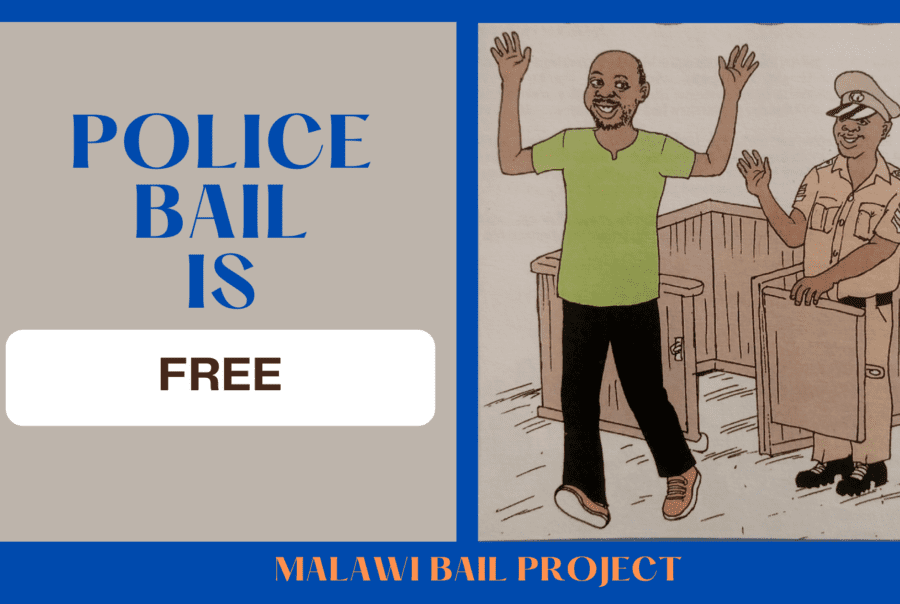
CHREAA is running a Bail Education Project through which it discovered that 75 percent of prisoners were ignorant of their right to bail.
Coordinator for the project Charlotte Mackenzie, divulging the findings during a training session of 0 magistrates from Blantyre courts, said the project is aimed at increasing the amount of bail applications made at the first court appearance.
“By training the magistrates, we hope to increase bail applications and as a result reduce overcrowding and congestion in prison,” Mackenzie said.
The project, funded by Matrix Chambers in London, also seeks to engage magistrates on concerns raised by prisoners regarding perceptions on impartiality.
CHREAA executive director Victor Mhango said, among other issues, prisoners were uncomfortable with the manner in which magistrates and state prosecutors interact during trials.
“CHREAA has been working with prisoners who raised concerns that when they seek bail in court, they are presumed guilty.
“Also, the prisoners said they are uncomfortable with the interaction between Police prosecutors and magistrates as they feel this jeopardises the magistrates’ independence,” Mhango said.
He added that another dimension of the project is to ensure that prisoners who have no legal representation in court are treated in the same manner as those that are represented by lawyers.

Some of the Law Books
The Centre for Human Rights Education, Advice and Assistance (CHREAA) has received a substantial gift from the International Law Books Facility, in the form of eighteen boxes of law books and texts. The books, which arrived in the office in Blantyre on the 19th of June 2012, were supplied by the UK-based charity in order to increase the depth and level of advice supplied by CHREAA to vulnerable persons and to the community at large.
The International Law Books Facility was established in 2005 and has so far supplied books to international organisations in more than twenty countries in order to improve access to legal information and therefore access to justice.
Malawi’s Chancellor College was also a recipient of the delivery, receiving fifteen boxes of books to replenish and expand their law libraries.
The donated books, a mixture of new and second-hand resources, are all very difficult to locate and rare within Malawi. Some books deal with the subject of international law: an area which is very close to the heart of the human rights core of CHREAA’s work.
CHREAA is also intending to benefit the wider community by building a library outside the office, inviting law students to come and read the books, which will significantly help them with their education as law libraries are both few and under-resourced throughout Malawi.
Most Malawian law resources in schools and universities are both out-dated and in high demand.
But it is conclusively clear that the provision of these books will certainly aid CHREAA paralegals who are mandated with the task of educating vulnerable people such as prisoners to enable them to have knowledge and the power to defend themselves in court.

Victor Chagunyuka Mhango, Executive Director.
CHREAA is liaising with the Bar Human Rights Committee of England and Wales in order to gain expert legal knowledge and advice for some of its tougher public interest cases.
Such pubic interest cases are those which either have particularly heinous Implications for an individual’s human rights or which represent a whole category of cases, such as long arbitrary pre-trial detention, prohibitively high bail bonds, and terminally ill remandees or inmates.
These are cases which particularly affect individuals in Malawi, and are relevant to the particular circumstances and problems facing Malawians within the legal system every day.
The BHRC project will provide pro bono casework assistance from UK-based barristers to enhance the quality and effectiveness of CHREAA’s litigation.
Highly specialised, expert legal practitioners will supply advice on case preparation, identify relevant case authorities and precedents, assist with drafting legal submissions, undertake research, and provide legal opinions on the referred cases.
Completion such public interest cases would enable a strong precedent to be set in favour of human rights in Malawi.
Over the past few years,CHREAA and the Southern Africa Litigation Centre (SALC) have partnered on numerous occasions to use litigation as a strategy to highlight the human rights violations faced by prisoners in Malawi.
In 2012, CHREAA and SALC jointly embarked on research to assess the extent to which the inappropriate use of nuisance laws in Malawi exacerbate overcrowding in police cells and prisons.
As part of this project, CHREAA is conducting research regarding the number of people who are arrested under the nuisance provisions in the Penal Code.
The research will involve visiting the Blantyre police stations on a daily basis between May and August 2012 to document the number of people arrested for nuisance offences and obtaining information from those detained on the reasons for their arrest.
In addition, CHREAA staff will also conduct interviews with women who had previously been arrested for ‘prostitution’ but under charges in terms of sections 180 and 184 of the Penal Code for being idle, disorderly, rogue, or vagabond.
CHREAA and SALC believe that these provisions in the Penal Code are vague and overbroad. The manner in which these laws are applied in practice, results in unlawful and arbitrary detention, violates human rights and worsens existing overcrowding in prisons and police cells.
CHREAA and SALC accordingly supports advocacy for the repeal of outdated offences. The research findings will be used in support of future litigation on this issue in Malawi.
CHREAA Probono Program Reaches Out to 39 Homicide Inmates

Alex Nkula
The Centre for Human Rights Education, Advice and Assistance’s (CHREAA) Pro bono program has in the calendar year 2011 facilitated and assisted 39 underprivileged and unrepresented Homicide inmates to process bail application with the High Court of Malawi.
CHREAA screened 39 Homicide inmates and out of these, 20 were granted bail by the High Court.
These were cases of inmates on remand and had their cases taking too long to be processed by the High Court of Malawi.
The 39 include the case of one Alex Nkula, accused of murder and spent 11 years in Chichiri Prison without his case being completed by the High Court of Malawi.
CHREAA promotes and protects human rights by assisting vulnerable and marginalized people in Malawi to access justice through civic education, advocacy, legal advice and assistance.
Most of these inmates were incarcerated at Chichiri Prison in Blantyre, Malawi.
The Pro bono program sees CHREAA work with prisons in identifying Homicide inmates whose cases are taking long to be heard and completed.
It identifies particularly under privileged Homicide inmates whose right to bail has not been exercised or have not had their cases heard by the high court. read more

Station Officer for Chichiri Prison Evance Katayika Chisi (back to Camera) explains to the British High Commission 's Kirk Hollingsworth (In Blue Tie) on Prison operation
Malawi’s prisoners have expressed grave concern that 63 years after the Universal Declaration of Human rights and 16 years after Malawi ratified the United Nations (UN) Human Rights Charter through the enactment of the 1995 Kwacha Conference Centre Republican Constitution, the wheels of justice in the country’s judicial system worryingly continue to drag at a snail’s pace.
The inmates also said that Malawi prisons are congested and have poor living and sanitation conditions, They said they lack of legal representation and that sometimes they are duped by unscrupulous lawyers who allegedly collect money from them and their relatives on the pretext of representing their cases.
The prisoners made the remarks on 9th December 2011 during a panel discussion organised by The
Centre for Human Rights Education Advice and Assistance (CHREAA) to mark this year’s World Human Rights Day at Chichiri Prison in Blantyre Malawi Read more
CHREAA and Leitner Center Conduct Gender-Based Violence Clinic in Traditional Authority Machinjiri
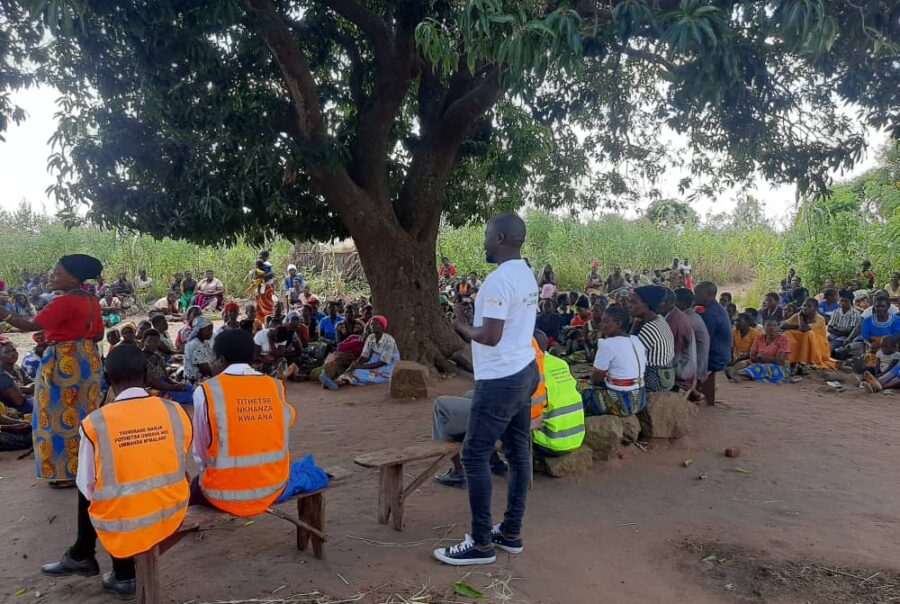
From November 14 – 18, 2011, CHREAA paralegals and peer educators partnered with students and faculty from Fordham Law School’s Leitner Center for International Law and Justice in New York City to administer a mobile legal-aid clinic for survivors of domestic violence. Conducted in Chaweta Village and Chambwinja group village Chimbiya in Traditional Authority Machinjiri in Blantyre District, the clinic provided direct legal assistance to more than 25 clients. In addition, the CHREAA/Leitner team conducted Know-Your-Rights presentations on Malawi’s Domestic Violence Act for hundreds of community members and created and distributed illustrative brochures about domestic violence in the local language Chichewa to almost 800 individuals. read more
On 12 October, the Charge d’Affaires, Kirk Hollingsworth officially launched a human rights project focussing on prisoners health at Chichiri Prison in Blantyre.
The project titled “Disease Screening and Control” will be run by the Centre for Human Rights Education, Advice and Assistance (CHREAA), a Non Governmental Organisation in Chichiri, Chikwawa and Thyolo prisons and will aim at improving health standards of prisons so that they comply with the International Minimum Standards of Treatment of Prisoners as adopted in 1955 by the UN Congress on the Prevention of Crime and Treatment of offenders.
The project will focus on improving admission procedures of prisoners and ensuring sick prisoners get medical treatment on time hence reducing transmission of diseases.
Speaking at the launch, Hollingsworth recognised the efforts by the Malawi Prisons Service and CHREAA in promoting and protecting the human rights of prison inmates in Malawi. He highlighted that prisoners are human beings and like any other group in society, deserve the right to be treated with humanity, diginity and respect. Full Speech
His Worship, Chief Resident Magistrate Nyakwawa Usiwa Usiwa, a member of the Prisons Inspectorate, Mercy Mulele, Board Chair for CHREAA, and the Regional Prisons Officer for the South, Litto Mtengano, all joined hands to commend the British Government for the support rendered to the Malawi Prisons Service.
In his speech, Usiwa Usiwa highlighted that some problems faced in prisons such as diseases and lack of space are curable or correctable hence the launch of the project is timely. Full Speech
Prisoners at Chichiri spiced the launch with dances, drama and poetry.